
Boost Efficiency with a Productivity Notebook Now
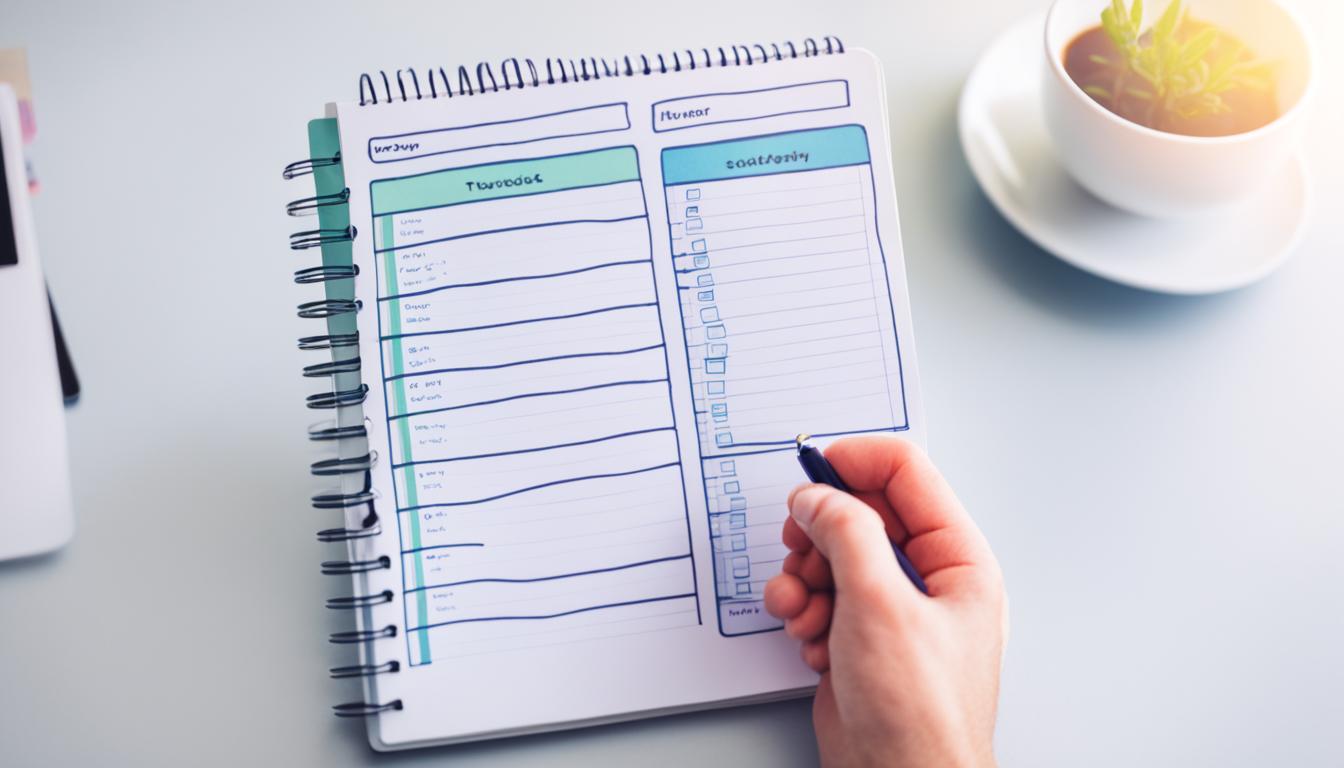
Are you tired of feeling overwhelmed by tasks and struggling to stay organized? Do you find yourself forgetting important information or ideas? It’s time to revolutionize your note-taking game with a productivity notebook. Say goodbye to scattered thoughts and hello to enhanced focus and productivity.
A productivity notebook is not just a regular notebook; it is a powerful tool designed specifically to help you maximize your efficiency and optimize your workflow. With the right productivity notebook, you can streamline your tasks, declutter your mind, and unlock your full potential.
But what makes a productivity notebook different from any other notebook? How can it truly boost your productivity? In this article, we will explore the importance of effective note-taking, different note-taking techniques, digital tools for efficient note-taking, and tips to improve your note-taking skills. We will also uncover the power of a productivity notebook and the invaluable benefits it can bring to your daily life.
Key Takeaways:
- Effective note-taking enhances understanding, retention, and recall.
- Traditional note-taking methods may not be efficient or effective.
- Exploring different note-taking techniques can improve organization and comprehension.
- Digital tools like note-taking apps and transcription services offer enhanced accessibility and collaboration.
- Improving your note-taking skills can lead to increased productivity and a better work-life balance.
Understanding the Importance of Effective Note-Taking
When it comes to boosting productivity and maximizing learning, effective note-taking is the key. It goes beyond just scribbling down information; it involves active engagement with the material, helping with comprehension, retention, and recall. Think of your notes as a roadmap that guides you through complex subjects and aids in organizing your thoughts.
Actively processing information and summarizing it in a way that makes sense to you helps solidify understanding and retention. By transforming complex concepts into bite-sized, digestible pieces, you enhance your ability to absorb and apply the information. Effective note-taking also improves focus, as it requires active listening and processing, allowing you to identify crucial points and filter out unnecessary details.
Not only does effective note-taking enhance your learning experience, but it also serves as a valuable resource for future review. When you revisit your well-organized and thoughtfully crafted notes, you’ll find it easier to recall the information and connect it to related concepts.
To illustrate the importance of effective note-taking, let’s take a look at a practical example using the concept of note retention:
| Passive Note-Taking | Effective Note-Taking | |
|---|---|---|
| Retention | Minimal retention due to a passive approach | Enhanced retention through active engagement and summarization |
| Understanding | Superficial understanding as a result of copying verbatim | Deeper understanding from processing and summarizing information |
| Recall | Difficulty recalling information due to lack of meaningful organization | Improved recall through well-structured notes |
| Productivity | Lower productivity due to time-consuming note review | Higher productivity with efficient note review and retrieval |
This example clearly demonstrates that effective note-taking is not only about transcribing information; it’s about actively engaging with the content, organizing it in a manner that makes sense to you, and ultimately improving your learning and productivity.
Now that we have explored the importance of effective note-taking, let’s dive deeper into why traditional note-taking methods may not work for everyone in the next section.

Why Traditional Note-Taking Methods May Not Work
When it comes to capturing information, traditional note-taking methods may seem like the go-to solution. However, relying on passive approaches such as copying verbatim or mindlessly highlighting can have limitations that hinder your learning and productivity.
Copying everything verbatim is a time-consuming process that overwhelms you with excessive details, making it difficult to identify the key concepts. Similarly, highlighting can create a false sense of accomplishment without actively engaging with the material. This passive approach fails to promote deep comprehension and understanding, leading to challenges when it comes to explaining and retaining the information.
To illustrate the drawbacks of traditional note-taking methods and to help you understand why they may not work effectively, let’s compare them to more efficient techniques:
The Passive Approach
When you copy information verbatim or rely solely on highlighting, you passively receive the content without actively processing it. This can result in an overwhelming amount of disjointed notes, making it challenging to extract the key points and connect the dots.
An Alternative Approach
In contrast, effective note-taking involves actively engaging with the material, allowing you to better comprehend and retain the information. By adopting proven techniques, you can transform your note-taking process into a powerful tool for learning and productivity.
It’s essential to be aware of the limitations of traditional note-taking methods. By understanding their drawbacks, you can explore alternative techniques that encourage active engagement and maximize your note-taking efficiency.

Exploring Different Note-Taking Techniques
Discover various note-taking techniques that can enhance your efficiency and organization. By implementing these methods, you can take your note-taking skills to the next level and optimize your productivity.
Cornell Method
The Cornell Method divides your notes into three sections, allowing for easy organization and review. Begin by dividing your paper into three sections: cues and main ideas, detailed notes, and summarizing main points. This method encourages active engagement and helps you extract key information from your notes.
Outline Method
The Outline Method is a hierarchical approach to note-taking. Structure your notes using bullet points or numbers to create an organized and logical flow. This method is particularly useful for capturing key points, subtopics, and relationships between ideas.
Mapping Method
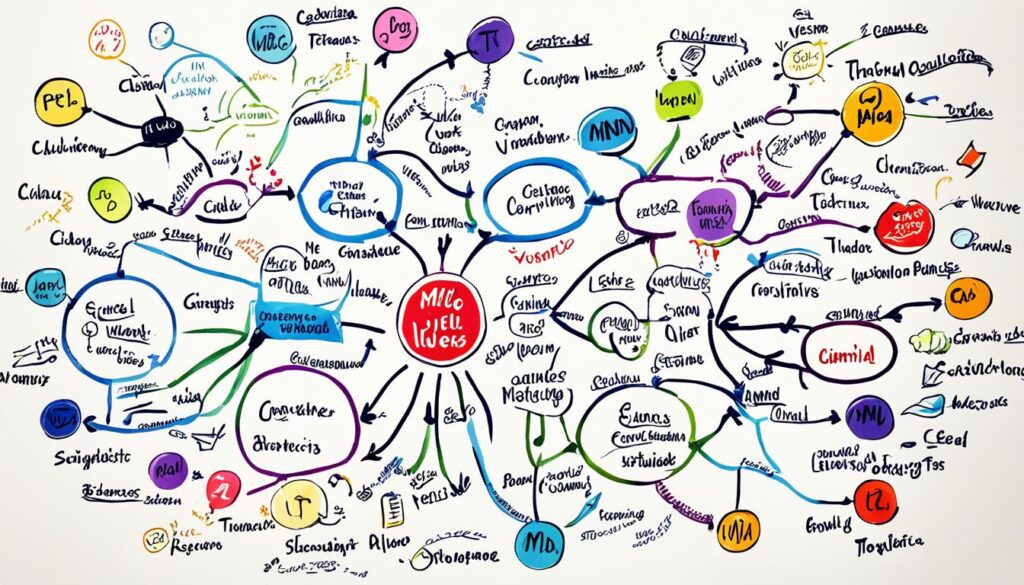
The Mapping Method utilizes visual elements to represent information. Create diagrams, flowcharts, or mind maps to visually organize your notes, highlighting connections and relationships between concepts. This method stimulates both the creative and analytical aspects of your brain for better understanding and retention.
Charting Method
The Charting Method categorizes information using tables or charts. Create columns and rows to classify and compare different aspects of the material. This method is effective for organizing data, making it easier to identify patterns and relationships.
Sentence Method
The Sentence Method involves writing complete sentences to capture key information. This technique ensures that your notes contain clear and concise statements that encompass the main ideas. By formulating complete sentences, you can easily grasp the context and meaning of the information.
Experiment with these different note-taking techniques to find the one that resonates with your learning style and enhances your understanding and retention. Remember, the goal is to find a method that allows you to effectively capture and review information in a way that works best for you.
| Note-Taking Technique | Description |
|---|---|
| Cornell Method | Divide your notes into cues and main ideas, detailed notes, and summarizing main points for easy organization and review. |
| Outline Method | Create a hierarchical structure using bullet points or numbers to capture key points and subtopics. |
| Mapping Method | Visualize your notes using diagrams, flowcharts, or mind maps to highlight connections and relationships between concepts. |
| Charting Method | Categorize information in tables or charts to organize data and identify patterns. |
| Sentence Method | Write complete sentences to capture key information and ensure clarity in your notes. |
Digital Tools for Efficient Note-Taking
Note-taking apps and digital tools provide a range of features that can significantly enhance your note-taking experience. With these tools, you can improve organization, accessibility, and collaboration, making your note-taking process more efficient and effective.
Note-Taking Apps
Popular note-taking apps like Evernote, Microsoft OneNote, and Google Keep offer comprehensive solutions for creating and managing your digital notebooks. These apps allow you to format your notes with headings, add attachments like images and documents, and even transcribe your handwritten notes for easier reference.
| Note-Taking App | Features |
|---|---|
| Evernote | – Create digital notebooks – Format notes with headings and attachments – Transcribe handwritten notes |
| Microsoft OneNote | – Organize notes in digital notebooks – Collaborate with others – Handwrite or type notes |
| Google Keep | – Create and organize notes – Add reminders – Collaborate with others |
Cloud Services for Note Storage
In addition to note-taking apps, cloud services like Dropbox, Google Drive, and iCloud provide storage and organization options for your digital notes. Storing your notes in the cloud ensures that they are accessible from any device with an internet connection, improving portability and flexibility.
| Cloud Service | Features |
|---|---|
| Dropbox | – Store and sync notes across devices – Share notes with others – Access notes offline |
| Google Drive | – Store and organize notes – Collaborate with others in real-time – Access notes from any device |
| iCloud | – Sync notes across Apple devices – Share notes with others – Collaborate with others in real-time |
Transcription Services for Comprehensive Note-Taking
Transcription services like Otter.ai and Rev offer a convenient way to transcribe audio recordings, making it easier to capture every detail during lectures, meetings, or interviews. This enhances the comprehensiveness of your notes and allows for easy reference in the future.
| Transcription Service | Features |
|---|---|
| Otter.ai | – Accurate audio transcription – Searchable transcriptions – Collaborative note-taking |
| Rev | – Human transcriptionists for quality results – Fast turnaround times – Editable transcriptions |
Using digital tools for note-taking can revolutionize how you capture and manage information, improving your productivity and organization. Whether it’s creating digital notebooks, storing notes in the cloud, or transcribing audio recordings, incorporating these tools into your note-taking workflow can take your productivity to new heights.
Tips to Improve Note-Taking Skills
Enhancing your note-taking skills is essential for capturing and retaining valuable information. By implementing effective strategies, you can optimize your note-taking process. Here are some tips to improve your note-taking skills:
- Active Listening: Actively engage in lectures and meetings by paying close attention and participating. This helps you capture important information and comprehend it better.
- Organized Notes: Use color-coded tags or folders to organize your notes systematically. This simplifies retrieval and facilitates efficient review of key concepts.
- Reviewing and Revising: Regularly review your notes to reinforce your understanding of the material. Highlight essential points and make connections between concepts to enhance comprehension and long-term retention.

Implementing active listening techniques, organizing notes effectively, and reviewing and revising regularly can significantly enhance your note-taking skills. These strategies will help you capture and process information more efficiently, leading to improved comprehension and retention.
The Power of a Productivity Notebook
When it comes to boosting your productivity, sometimes the old-fashioned analog approach can be the key to success. Enter the productivity notebook, a simple yet powerful tool for staying focused, organized, and creative in both your personal and digital life.
Using a productivity notebook allows you to separate yourself from digital distractions and immerse yourself in the present moment. By writing down your plans, thoughts, and ideas on paper, you give them the undivided attention they deserve. This analog approach helps you declutter your mind and stay laser-focused on the task at hand.
One of the greatest advantages of a productivity notebook is its flexibility. Unlike digital tools that often come with rigid structures and strict start and stop times, a notebook gives you the freedom to customize your schedule and tasks according to your needs. Whether you’re a morning person or a night owl, a productivity notebook adapts to your natural rhythms, allowing you to work at your own pace and achieve optimal productivity.
But it’s not just about productivity – a notebook also sparks creativity. Recording your ideas on paper provides a tangible representation of your creative journey. From the cross-outs and handwritten changes to the margin notes and doodles, your notebook becomes a visual testament to the evolution of your thoughts and ideas. It’s a personal canvas where you can freely express your creativity and capture the essence of your creative process.
So, how can you make the most of your productivity notebook? Personalize it to suit your preferences and needs. Experiment with different layouts, color schemes, and organizational methods. Embrace the freedom of a blank page and let your creativity soar. Remember, your notebook is a reflection of your unique style and approach to productivity, so make it truly yours.
Productivity Notebook Recommendations
| Productivity Notebook | Features |
|---|---|
| Leuchtturm1917 | Numbered pages, table of contents, built-in pen loop |
| Moleskine | Cream-colored paper, expandable inner pocket, ribbon bookmark |
| Rhodia | Smooth, fountain pen-friendly paper, sturdy cover |
| Field Notes | Compact size, durable cover, variety of designs |
With a productivity notebook by your side, you have the power to unlock your full potential. Embrace the analog approach, focus on what truly matters, separate yourself from digital distractions, and unleash your creativity. Start recording your creative journey today and witness the transformative effect it has on your productivity and well-being.
Conclusion
A productivity notebook is an indispensable tool that can boost your efficiency and greatly improve your productivity. By understanding the importance of effective note-taking, exploring various note-taking techniques, utilizing digital tools, and implementing practical tips, you can significantly enhance your note-taking skills and unleash your full potential.
With the right productivity notebook in hand, you can elevate your daily output and achieve a better work-life balance. The notebook enables you to capture and organize your thoughts, ideas, and tasks, allowing you to stay focused, prioritize effectively, and efficiently manage your time.
Not only does a productivity notebook offer you a tangible and customizable tool for note-taking, but it also provides a wealth of benefits for your productivity and overall well-being. By sharpening your note-taking skills and utilizing helpful digital tools, you can enhance your ability to retain information, improve comprehension, and foster creativity. These tools enable you to access your notes from anywhere, collaborate with others, and organize your thoughts in a way that suits your own personal style.
FAQ
What is the best productivity notebook?
The best productivity notebook is subjective and depends on individual preferences. Some popular options include the Passion Planner, Panda Planner, and Moleskine Smart Writing Set.
How can a productivity notebook boost efficiency?
A productivity notebook helps you stay organized, prioritize tasks, and track progress. By using a dedicated notebook, you can focus on important tasks, limit distractions, and find a work-life balance.
What are some popular note-taking techniques?
Popular note-taking techniques include the Cornell Method, Outline Method, Mapping Method, Charting Method, and Sentence Method. Each technique offers a unique approach to organizing and summarizing information.
Which note-taking apps are recommended for digital note-taking?
Recommended note-taking apps include Evernote, Microsoft OneNote, and Google Keep. These apps allow for creating digital notebooks, formatting notes, and transcribing handwritten notes.
How can I improve my note-taking skills?
To improve note-taking skills, actively listen and participate during lectures or meetings, organize notes effectively with color-coded tags or folders, and regularly review and revise your notes.
What are the benefits of using a productivity notebook over digital tools?
A productivity notebook offers an analog approach to writing down plans and thoughts without digital distractions. It provides a tangible record of your creative journey and allows for flexible scheduling and brainstorming.
Can a productivity notebook help with goal setting?
Yes, a productivity notebook can be used for goal setting by providing a space to define and track your goals, break them down into actionable tasks, and monitor progress.
How can effective note-taking boost productivity?
Effective note-taking improves comprehension, retention, and recall of information. It serves as a roadmap to guide you through tasks and aids in organizing your thoughts, resulting in enhanced productivity.